
General Hospital
Key notionA hospital beyond pubilc health
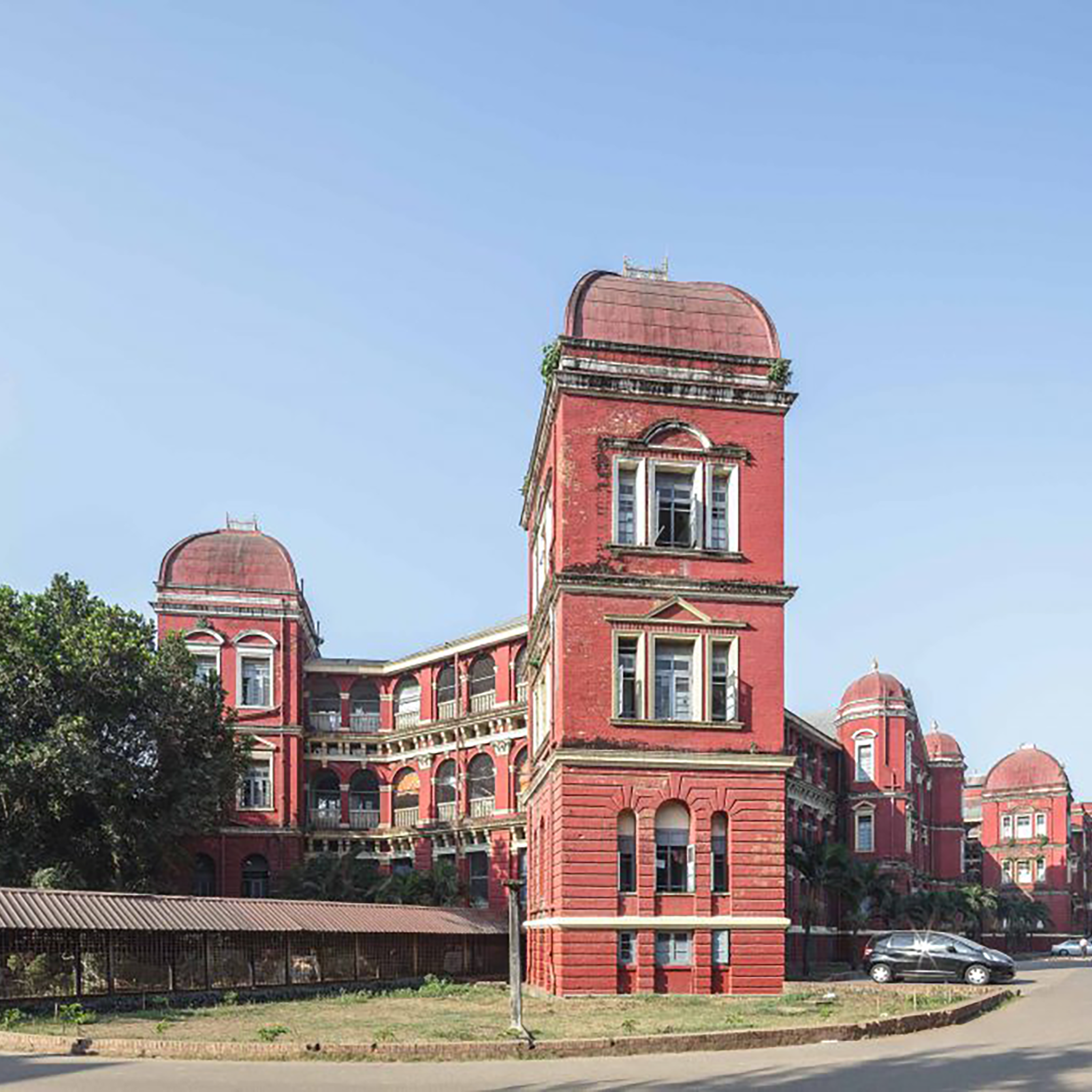
The General Hospital is one of the oldest buildings of the colonial period and an essential building for Yangon’s urban landscape and socio-historical development. Over the years, the main building was complemented by the additional wings and tracts over a few years afterwards. Upon completion, the new hospital was cutting-edge, with its electric- city- powered operating theatres and anaesthetics rooms. The floors were made of reinforced concrete, a first for Yangon. The main building is more than 200 meters long and has three stories. Its red bricks and yellow plaster create a unique appearance, visible through the trees from Bogyoke Road. The colonial-era hospital was on the front line in the fight against a range of infectious diseases; cholera, typhoid, and malaria were rampant. In 1988, the hospital took a tragic role in the Uprisings. The doctors and nurses did their best to care for hundreds of injured protestors, many of whom arrived at the hospital with gunshots wounds. The bloodshed was severe, and there was not enough blood for transfusions; Scores died in the corridors. In response, medical staff took to the street just outside the hospital, carrying a banner calling for an end to the violence. Soldiers came to the hospital in three trucks and began shooting indiscriminately. Until today, the hospital remains an important place for wound protestors.
Civic Space Category administration /public service
Built1904-1911
Date of Incident1988
Please you can go to To-Gatherness and help us to create more content
Other Locations from this {post_terms_timeline:plain} Generation
Built in 1926 for Balthazar&Son, this well-preserved colonial building housed the US Embassy after Myanmar's independence and witnessed the tragic 8.8.88 student protest.
See other generations
First Generation
The 1947 Pinlon Agreement, championed by General Aung San, established a framework for Myanmar's multi-ethnic federal state, celebrated annually as "Union Day" on February 12th, but lat
Second Generation
Following the 1962 coup d'état, General Ne Win suppressed student activism by destroying RUSU and closing universities. This sparked underground resistance culminating in 1988 protests.
Third Generation
The 1974 U Thant Crisis erupted when Ne Win refused proper burial for the former UN Secretary-General, sparking student protests that led to a memorial built in 1975.
Fifth Generation
The 2007 Saffron Revolution saw Myanmar monks protesting rising prices, facing military blockades at key pagodas.
Sixth Generation
The 2021 Golden Spring revolution followed Myanmar's military coup against NLD's electoral win. Civil disobedience evolved into armed resistance as streets became protest spaces.