
Convocation Hall, Yangon University
Key notionmore than higher education
It was established in 1887 as an affiliated college of the University of Calcutta, where the British Colony directed the administration. Later, in 1904, it was renamed College of Government; in 1920, it was renamed Rangoon University. Today, the University is the oldest in Myanmar’s modern education system and the best-known in Myanmar. The University and its associated facilities faced many sanctions for its political legacy, such as the periodical shutdowns after students’ protests. Yangon University’s national and political significance The military authorities ended the University’s autonomy in 1962, placing it under central government control. The language of instruction was changed from English to Burmese. The 1964 University Education Act separated several professional departments from the University, establishing them as separate universities: the University of Medicine, the University of Economics, the University of Technology, and the University of Education. At that point, the University was renamed the Rangoon Arts and Sciences University, concerned only with liberal arts, sciences, and law. Yangon University is one of the most contested spaces in Yangon, one of immeasurable political importance for the city’s history. It is the origin of all political changes of the 20th century and the place of rallies for the protestors. It was the nest of successive generations of the country’s brightest minds to stratify and discuss the liberation of the oppressive reigning elitist, whether the British colonists or the Military Regime. In a series of changes, the names of public institutions that were established and its name were given by the British to symbolize independence. Rangoon University was then 1989 changed to the University of Yangon.
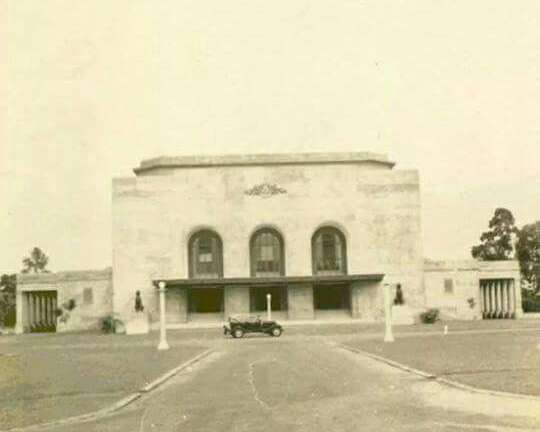
Civic Space Category educational
Builtca. 1927
Interviews
Heritage Protection
 When clicked, this video is loaded from Vimeo servers. See our privacy policy for details.
Other Locations from this {post_terms_timeline:plain} Generation
The U Thant Mausoleum, built near Shwedagon Pagoda in 1975, resulted from public protest against military disrespect for the respected UN statesman's funeral.
Built in 1866, Rangoon Downtown Prison housed political prisoners who fought for liberation. This smaller version of Insein Prison confined student activists in the 1970s-80s.
See other generations
First Generation
The 1947 Pinlon Agreement, championed by General Aung San, established a framework for Myanmar's multi-ethnic federal state, celebrated annually as "Union Day" on February 12th, but lat
Second Generation
Following the 1962 coup d'état, General Ne Win suppressed student activism by destroying RUSU and closing universities. This sparked underground resistance culminating in 1988 protests.
Fourth Generation
The 8888 Uprising saw massive protests against General Ne Win's 26-year military rule in Myanmar, marking Aung San Suu Kyi's emergence as a democratic leader.
Fifth Generation
The 2007 Saffron Revolution saw Myanmar monks protesting rising prices, facing military blockades at key pagodas.
Sixth Generation
The 2021 Golden Spring revolution followed Myanmar's military coup against NLD's electoral win. Civil disobedience evolved into armed resistance as streets became protest spaces.