
U Thant Mausoleum
Key notion9/11 for Myanmar People
As the final resolution of the U Thant Funeral Crisis, the U Thant Mausoleum was built one year after the crisis, in 1975. Today, it is placed near the Shwedagon Pagoda. The case of U Thant’s funeral depicts the depths and importance of ceremonies for the community and, on the other side, the bias and unjust treatment of the military regime towards statemen. However, the case is evident in the fight for respect for respected statemen by the people.
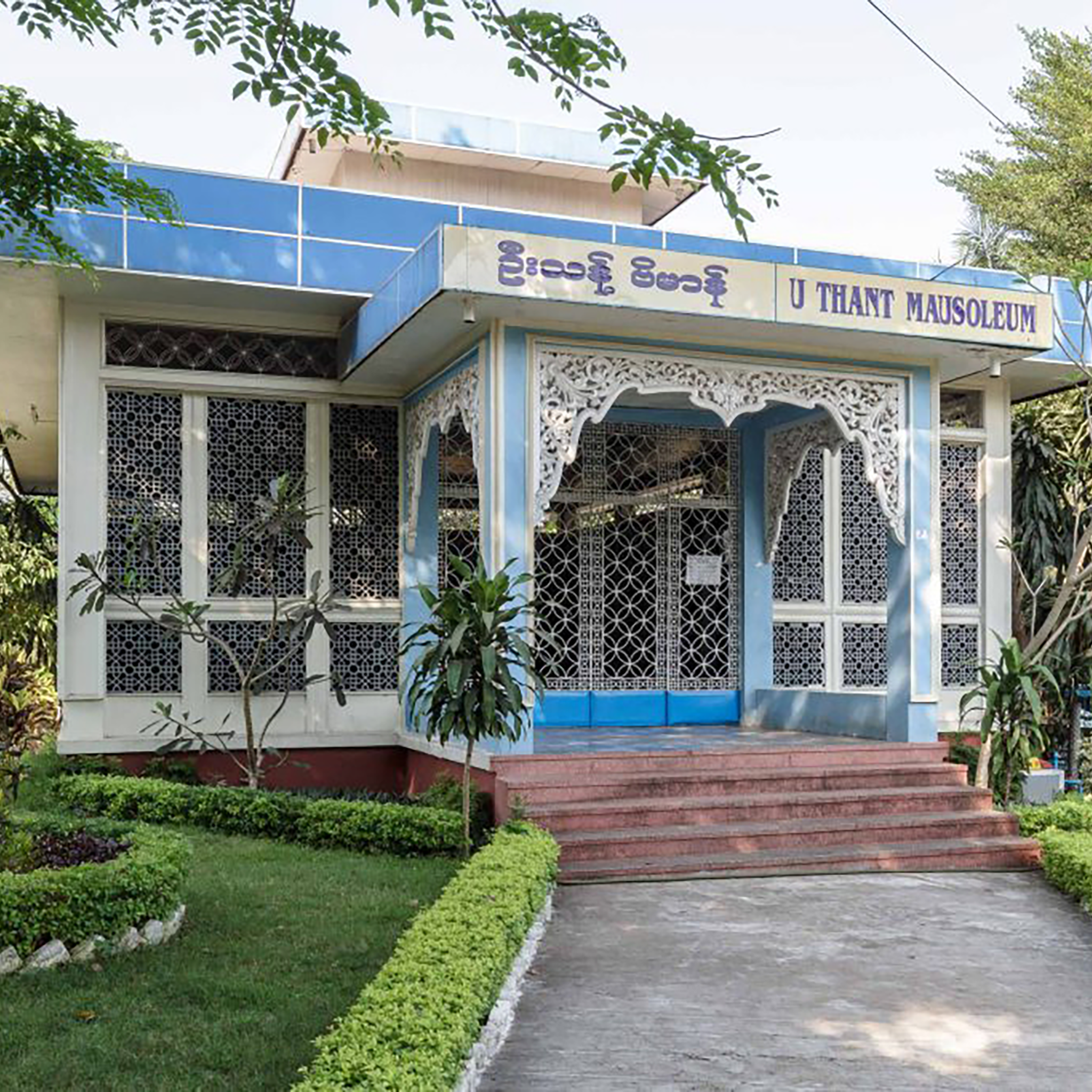
Civic Space Category religious/ memorial
Built1975
Date of Incident1970s ?
Location AdressShwedagon Pagoda Road
Please you can go to To-Gatherness and help us to create more content
Other Locations from this {post_terms_timeline:plain} Generation
Founded in 1887, Yangon University became Myanmar's political epicenter. After losing autonomy in 1962, it faced shutdowns and restructuring due to student activism.
Built in 1866, Rangoon Downtown Prison housed political prisoners who fought for liberation. This smaller version of Insein Prison confined student activists in the 1970s-80s.
See other generations
First Generation
The 1947 Pinlon Agreement, championed by General Aung San, established a framework for Myanmar's multi-ethnic federal state, celebrated annually as "Union Day" on February 12th, but lat
Second Generation
Following the 1962 coup d'état, General Ne Win suppressed student activism by destroying RUSU and closing universities. This sparked underground resistance culminating in 1988 protests.
Fourth Generation
The 8888 Uprising saw massive protests against General Ne Win's 26-year military rule in Myanmar, marking Aung San Suu Kyi's emergence as a democratic leader.
Fifth Generation
The 2007 Saffron Revolution saw Myanmar monks protesting rising prices, facing military blockades at key pagodas.
Sixth Generation
The 2021 Golden Spring revolution followed Myanmar's military coup against NLD's electoral win. Civil disobedience evolved into armed resistance as streets became protest spaces.